Ngorongoro Conservation Area
The Ngorongoro Conservation Area is one of Tanzania’s most remarkable natural destinations, famous for its spectacular landscapes, abundant wildlife, and unique combination of wildlife conservation and traditional human settlement. Located in northern Tanzania, between the Serengeti ecosystem and the Great Rift Valley, the conservation area is a highlight of many Tanzania safari itineraries.
The area is internationally recognized for its outstanding natural and cultural importance. It includes diverse ecosystems, including volcanic highlands, open grasslands, forests, crater lakes, and the world-famous Ngorongoro Crater. Visitors can enjoy exceptional wildlife viewing while learning about the Maasai people, who have long maintained a pastoral connection to the landscape.
Whether you are planning a wildlife safari, a cultural visit, a photography adventure, or a scenic highlands excursion, Ngorongoro offers memorable experiences year-round.
The Ngorongoro Crater
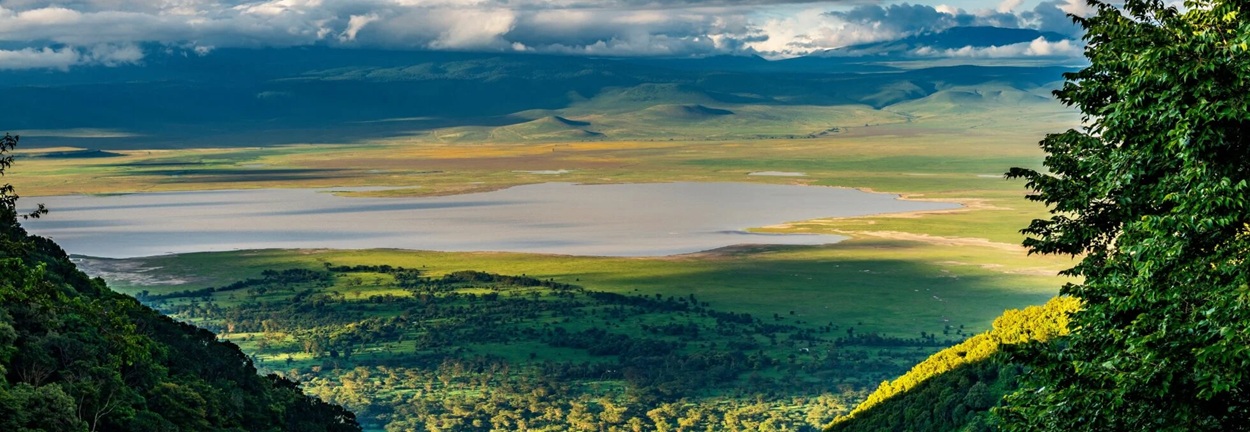
The Ngorongoro Crater is the conservation area’s main highlight. This huge volcanic caldera was created when a large volcano collapsed in on itself after a major eruption millions of years ago.
The crater is about 19 kilometers wide and covers roughly 260 square kilometers. Its steep, forested walls surround a natural wildlife sanctuary. With year-round water, grasslands, swamps, and woodlands, the area supports many animals and is one of the best places in Tanzania to see wildlife in a compact space.
On the crater floor, you might see lions, elephants, buffaloes, zebras, wildebeest, spotted hyenas, hippos, and many kinds of birds. It is also one of the best places in northern Tanzania to spot the endangered black rhinoceros, though seeing one isn't guaranteed.
The scenery around the crater is just as stunning. From the rim, you can enjoy wide views across the caldera. As you go down to the floor, the landscape shifts between grasslands, wetlands, and areas full of wildlife.
Wildlife you can see in Ngorongoro
Lions
The crater is home to many lions. Visitors often see them resting in the grass or walking across the open plains.
Black rhinoceros
Ngorongoro is a key place for the endangered black rhino. With patience and a good guide, you are more likely to spot one.
Elephants
You might see large bull elephants moving through the crater’s grasslands and woodlands.
Hippos and spotted hyenas
Hippos live in the crater’s lakes and ponds. Spotted hyenas are also common and can be seen throughout the area.
Top tour activities in the Ngorongoro Conservation Area
Beyond the famous crater game drive, the conservation area offers hiking, cultural encounters, birdwatching, archaeological exploration, and scenic excursions.
Ngorongoro Crater game drive
Descend into the crater in a 4x4 safari vehicle for a wildlife-viewing adventure across grasslands, wetlands, and woodland habitats. Look for lions, elephants, buffaloes, zebras, hyenas, and the endangered black rhino. This is the essential activity for first-time visitors.
Maasai cultural tour
Visit an authorized Maasai cultural boma to learn about traditional homes, cattle keeping, beadwork, dances, and local customs. These visits offer insight into how pastoral communities relate to the landscape they live in.
Olduvai Gorge archaeological tour
Explore Olduvai Gorge, one of the world’s most important sites for understanding human evolution. Learn about fossil discoveries, ancient stone tools, and the research of Mary and Louis Leakey.
Empakaai Crater hiking
Take a guided hike to viewpoints overlooking Empakaai Crater. Its forested crater walls and beautiful lake provide a quieter, scenic alternative to the busy wildlife-viewing routes.
Olmoti Crater and nature walks
Discover the highland scenery around Olmoti Crater on a guided walk. Enjoy volcanic landscapes, native vegetation, birdlife, and views of the surrounding highlands.
Endoro Waterfalls and forest excursions
Explore selected highland forest trails and discover the natural beauty of Endoro Waterfalls. Guided excursions can offer opportunities to appreciate forest vegetation, birdlife, and the area's quieter natural attractions.
Walking and hiking activities should be arranged in advance with the appropriate conservation authority or authorized operator. Some trails require an armed ranger or designated guide.
Ndutu Plains: Known for seasonal wildlife movements and its importance to the Great Migration, particularly during the calving season.
Gol Mountains: A remote, scenic area offering opportunities for hiking and seasonal wildlife viewing.
Nasera Rock: A striking rock formation with archaeological significance and distinctive surrounding landscapes.
Nasera Rock: A striking rock formation with archaeological significance and distinctive surrounding landscapes.
Oldoinyo Lengai: An active volcano sacred to the Maasai, visible from parts of the surrounding highlands. Climbing requires careful planning and appropriate guidance.
These attractions can help travelers discover the wider conservation area beyond the main crater circuit.