+255(0) 784 383 262 / 754 383 262 info@jntraveltours.com

8-Day Kilimanjaro Climb via the Machame Route
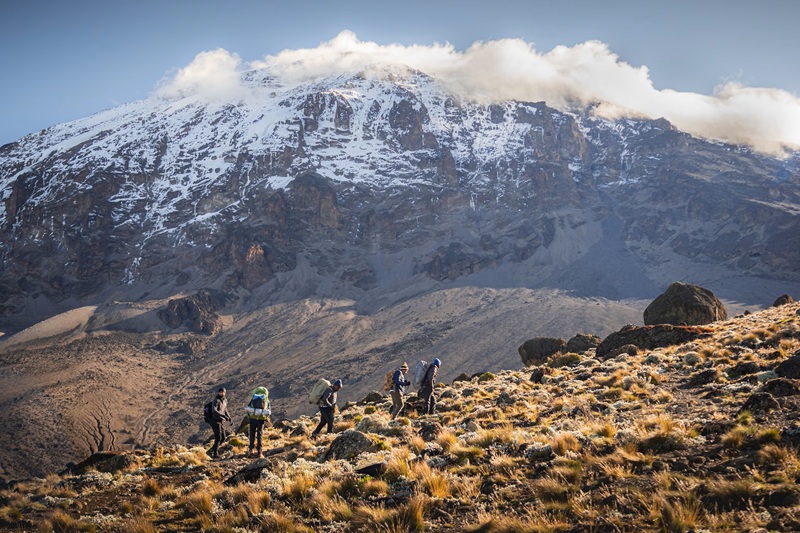
Mount Kilimanjaro stands at 5,895 meters (19,341 feet), making it Africa’s tallest mountain and one of the most accessible high-altitude treks. You do not need special climbing skills to reach the top, but the altitude makes it a real physical test. An eight-day trip on the Machame Route gives you an extra day to adjust to the altitude, which helps you prepare before attempting the summit.
The Machame Route is popular for its changing scenery and beautiful camps along Kilimanjaro’s southern side. Here is what you can expect on an eight-day climb, how the schedule works, and tips to help you get ready.
Climb Machame Route

Why Choose the Machame Route?

The Machame Route is sometimes called the “Whiskey Route,” a traditional nickname contrasting it with the easier-sounding Marangu, or “Coca-Cola,” Route. Machame is not a technical mountaineering route, but it is steeper and more demanding than some alternatives.
Its appeal includes:
      • Scenery: The trail passes through rainforest, heath and moorland, alpine desert, and the high-altitude summit zone.
      • A varied ascent: Trekkers climb high during the day and often descend to sleep at a lower elevation, following the useful acclimatization principle of “climb high, sleep low.”
      • An extra acclimatization day: Compared with a typical six- or seven-day Machame itinerary, an eight-day schedule can provide more time for gradual adjustment.
      • A loop-style journey: The route approaches the summit from the southwest and descends via the Mweka Route, so the ascent and descent are not simply the same trail in reverse.
The extra day can help with acclimatization, but it doesn’t eliminate the risk of altitude illness or guarantee anyone will reach the summit. Fitness, pacing, health, weather, and individual response to altitude all matter.

The 8-Day Machame Route Itinerary

Exact camp names and daily distances can vary slightly between operators. The schedule below is a common eight-day version, generally counting the summit and descent as one demanding trekking day.

Day 1: Machame Gate to Machame Camp 1,800 m to 2,835 m

Day 2: Machame Camp to Shira Camp 2,835 m to 3,750 m

Day 3: Shira Camp to Lava Tower, then to Barranco Camp 3,750 m to 3,900 m

Day 4: Barranco Camp to Karanga Camp 3,900 m to 4,000 m

Day 5: Karanga Camp to Barafu Camp 4,000 m to 4,673 m

Day 6: Barafu Camp to Uhuru Peak, then to Mweka Camp 4,673 m to 5,895 m, then down to about 3,100 m

Day 7: Mweka Camp to Mweka Gate About 3,100 m to 1,640 m

Day 8: Recovery day or onward travel Usually arranged outside the mountain trek

Machame Route Cost Includes
2 nights’ accommodation at Keys Hotel on BB
Private professional mountain guides
All Park fees
Rescue fees
All meals while on the Mountain
Arrival and Departure transfers
Government taxes, VAT, and all related service charges
Guides, Porters, cook salaries, and park fees
Summit Oxygen
Walking Sticks
Camping Gears
Cost Excludes
Tanzania Visa: $50 per person on arrival
Personal Expenses (e.g., laundry, telephone, beverages, etc.)
Meals not listed above
Optional Tours (short safari after your climb, etc)
Tips and any personal items.
Emergency Evacuation by Flying Doctor

Day-by-Day Machame Route 

Day 1: Machame Gate to Machame Camp

After registering at the Machame Gate, hikers will trek uphill into the dense montane rainforest. This trail can be particularly slippery, especially in rainy weather. The trail can also be hot, as the lower forest is warmer than the other camps.
Take a steady pace on the first day, since most of the time will be spent climbing. This is essential to have enough energy to continue hiking on the following days. You’ll spend the night at the Machame campsite, located en route and above the forest.

Day 2: Machame Camp to Shira Camp

The forest opens up into heath and moorland, offering more panoramic views of the mountain and the surrounding landscape. As you trek on, you ascend the Shira Plateau, a high-altitude volcanic region west of Kibo, Kilimanjaro’s main peak.
You may experience big temperature swings, from hot days to cold nights. Drink plenty of water and follow your guide’s advice on how much to push yourself.

Day 3: Shira Camp to Lava Tower to Barranco Camp

This is an acclimatization day as you climb higher to Lava Tower (approximately 4,600 meters) and then descend to Barranco Camp (approximately 3,900 meters). The idea is that you spend a night at a lower altitude than the highest point you’ve reached that day.

You may start to notice effects of altitude here, such as headaches, loss of appetite, fatigue, or nausea. It is important to notify your guide if any of these occur. Your guide will always assess the situation and decide whether it is safe for you to continue climbing. A day’s itinerary should never take precedence over medical needs.

Day 4: Barranco Camp to Karanga Camp

The morning walk mostly starts on the Barranco Wall, which can look very challenging from below because of its steepness, but it’s not that hard to climb up. You will need to use your hands to climb up, but you should not need any technical equipment as a hiker. Just follow your guide’s directions and take your time. After that, you’ll hike across ridges and through valleys toward Karanga Camp.
While the hike might be a bit shorter than the previous day, it isn’t necessarily easier, as you will be walking up and down slopes and terraces, and the ground is uneven in many places, so you’ll need to take it slow.

Day 5: Karanga Camp to Barafu Camp

This morning, we will trek to Barafu Camp, located at a higher elevation and serving as the main base before the summit ascent. Along the way, the landscape shifts from vegetation to a more barren, desert-like environment. At Barafu Camp, we will eat, prepare our gear for the summit, and rest for the night.
It is advisable to rest as much as possible, although sleeping well may be difficult due to the altitude. Stay warm, eat and drink plenty to maintain energy and hydration, and organize your belongings and gear in preparation for summit day.

Day 6: Summit attempt and descent to Mweka Camp

The summit climb is an enormous task that typically begins at midnight. Although the goal is to reach the crater’s edge and witness the sunrise, this endeavor is connected with several challenges. First, hikers must overcome the most difficult part of the trek on the way to the top. In addition, the route is practically inaccessible because of the cold temperatures and darkness. The hardest points are the inclines near Stella Point and the summit itself.
After leaving Stella Point, you must follow the crater rim to Uhuru Peak, Kilimanjaro's highest point. However, the celebration of reaching the summit is not yet complete. The next stage is to descend to Barafu and then to Mweka Camp, which can be challenging for weary legs and knees. The guide may refuse to proceed on the day of the attempt if the guest shows signs of illness or discomfort. After all, at such high altitudes, any decision is final.

Day 7: Mweka Camp to Mweka Gate

The final decline leads back into the forest to Mweka Gate. After you reach the gate and finish the hike, most operators will give you a certificate of completion for summiting the peak. You will then be taken back to your accommodation or another designated place.
If you told the representative the climb takes eight days, ask what happens on the eighth day. Usually, these itineraries include a rest day, a transfer, or both.

Day 8: Departure

On your last day, say goodbye to Tanzania as you drive to your hotel or the nearest town. Many operators allow you to extend your stay in Moshi or Arusha, where you can explore on foot, by bicycle, or take a safari tour.

Climb Includes

  • 8-day adventure, 6 of which include 3 meals a day
  • 2 nights of accommodation in Moshi, breakfast included
  • Airport Pickup from Kilimanjaro Airport
  • All Ground Transfers
  • Accommodation while trekking*
  • National Park Entry Fees
  • Fully licensed, English-speaking guide
  • Porter service on the trek
  • First aid kit
  • Trip completion certificate
  • Farewell Dinner
Cost Exclusions
  • Visas.
  • All meals are included on the climb, but we include only breakfast while you are in Moshi.
  • We suggest a minimum tip of $300 for your climbing staff.

Altitude and Acclimatization

As you go higher, there is less oxygen in the air with each breath. Anyone can get altitude sickness, even if they are fit and experienced. The best way to stay safe is to climb gradually, keep a steady pace, and speak up quickly if you notice any symptoms.
Headache, nausea, dizziness, feeling very tired, and losing your appetite are common signs of acute mountain sickness (AMS). More serious symptoms include confusion, trouble walking straight, shortness of breath even at rest, or a worsening cough. If these happen, get help right away and be ready to go down quickly.
Here are some helpful tips:
      • Walk slowly. Guides often say pole pole, a Swahili phrase that means “slowly, slowly.”
      • Stick to the planned route. Avoid rushing ahead or doing extra physical activity.
      • Let your guide know how you are feeling. Don’t hide any symptoms, even if you worry about slowing down the group
      • Drink water often and eat what you can. Staying hydrated and nourished helps, but drinking too much water won't prevent altitude sickness.
      • Talk to a doctor about medication. Some trekkers use acetazolamide, but it is not right for everyone, so ask a medical professional before your trip.
No plan or medicine can make high-altitude climbing completely safe. A good trekking company should have a clear way to check on trekkers, carry emergency gear, and arrange evacuation if needed.

Best Time to Go

While you can hike Mount Kilimanjaro year-round, some months are better than others. It is generally driest from January to early March and June to October, though these are general trends. You may also encounter rain or even snow in other months.
Your preferred window for visiting Mount Kilimanjaro will likely depend on what you want to experience. Trails can be slippery, and hiking during the warmer months can be more challenging because the higher portions of the mountain are harder to climb. No matter when you go, pack warm clothing and be prepared for changing weather conditions.