Tarangire National Park
Tanzania’s Elephant & Baobab Trees Country
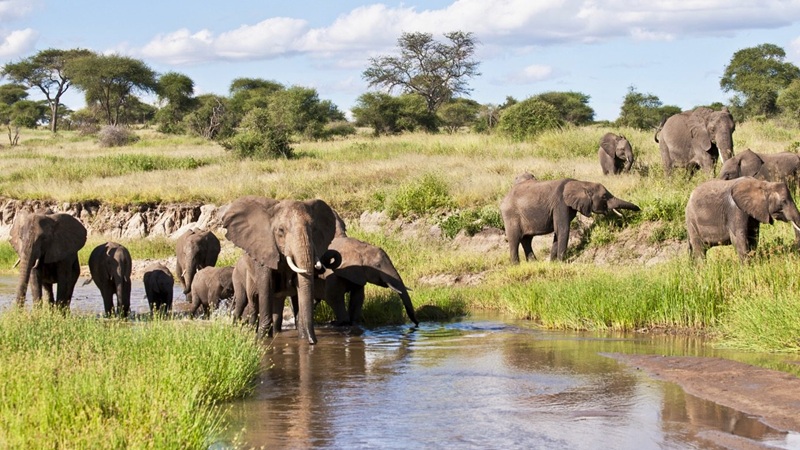
In northern Tanzania, Tarangire National Park offers a vivid introduction to East Africa’s wildlife and landscapes. Here, large herds of elephants move across open plains, ancient baobab trees rise above the grass, and the Tarangire River draws animals together during the dry season. Although it is less famous than the Serengeti or Ngorongoro Crater, Tarangire rewards visitors with remarkable wildlife viewing, varied habitats, and a quieter safari atmosphere.
Where Is Tarangire National Park?
Tarangire lies in Tanzania’s Manyara Region, about 120 kilometers (75 miles) southwest of Arusha. It forms part of the country’s northern safari circuit and is often visited alongside Lake Manyara National Park, Ngorongoro Conservation Area, and Serengeti National Park.
The park covers roughly 2,850 square kilometers (1,100 square miles). Its landscape includes open grasslands, acacia woodlands, seasonal wetlands, rocky outcrops, and riverine forest. This variety of habitats supports a wide range of plants and animals—and gives the park a different feel from the broad, treeless plains many travelers associate with Tanzania.
The Tarangire River and the Dry-Season Gathering
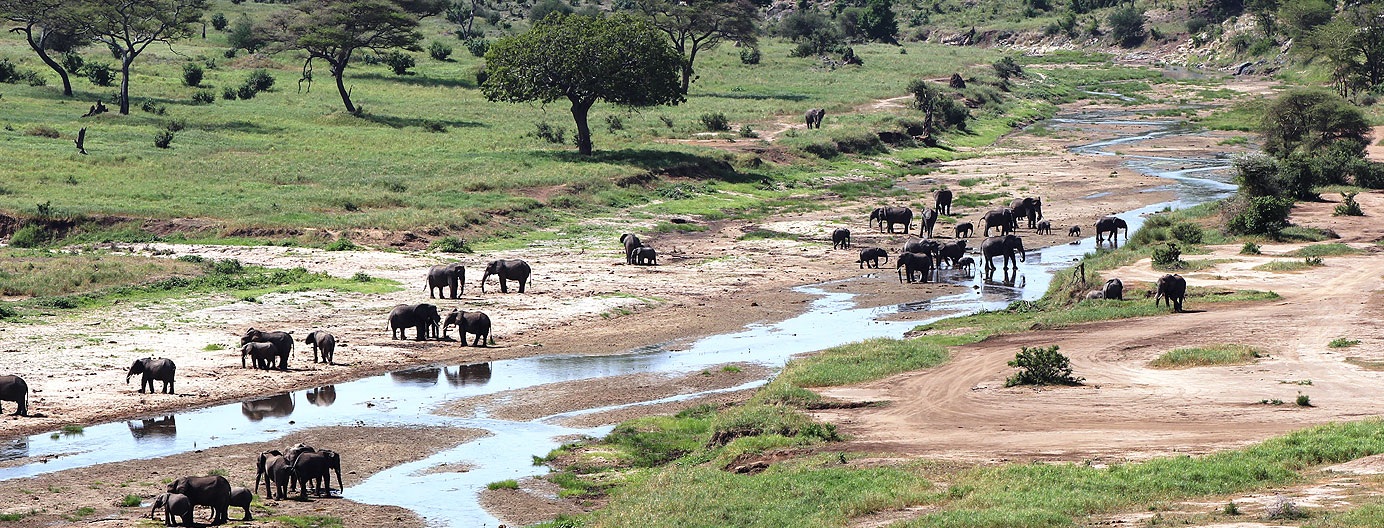
The Tarangire River is the park’s central lifeline. It flows year-round, even as many smaller water sources dry up during the long dry season. As a result, animals from the surrounding region gather near the river and its remaining pools.
From about June to October, wildlife viewing can be especially rewarding. Elephants, zebras, wildebeest, giraffes, buffalo, and other animals concentrate around reliable water and grazing. The exact timing and intensity of these movements vary with rainfall, but the seasonal contrast is one of Tarangire’s defining features.
During the rainy season, from around November to May, water and fresh vegetation become more widely available. Many animals disperse beyond the park, and the landscape turns greener. The park can be quieter then, with excellent birdlife and beautiful scenery, though wildlife may be more spread out.
Elephants and Other Wildlife
Tarangire is particularly renowned for its elephants. Visitors may see family groups crossing the plains, feeding among trees, or gathering near the river. The park’s baobab trees are sometimes damaged by elephants seeking moisture or minerals, a reminder of how closely wildlife and landscape interact.
Other mammals commonly found in Tarangire include:
-
-
- Giraffes, often browsing in acacia woodland
- Zebras and wildebeest, which move in large groups and may travel seasonally
- Buffalo, frequently seen near water or in open grassland
- Impala, gazelles, and waterbuck, common prey for predators
- Lions and leopards, though sightings are never guaranteed
- Cheetahs and spotted hyenas, which may be seen in suitable areas
-
The park is also known for its relatively high diversity of antelope. Less frequently spotted animals include fringe-eared oryx and gerenuk, which are more likely to be found in particular habitats and at certain times of year.
Tarangire’s wildlife follows natural rhythms, not a schedule. Guides can improve the chances of finding animals, but responsible visitors should remember that no sighting is guaranteed.
Baobabs, Woodlands, and Wetlands
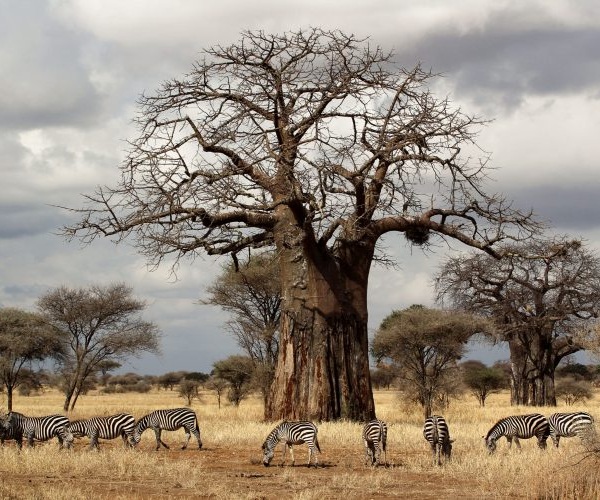
The baobab is one of Tarangire’s most recognizable features. Its thick trunk and broad branches stand out against the savanna, and older trees can live for centuries. Baobabs store water in their trunks and produce fruit that supports wildlife and local communities.
The park’s plant life changes with the terrain. Acacia and other woodland trees provide shade and browse, while open grasslands offer grazing. Seasonal swamps and wetlands are important feeding and breeding areas, especially for waterbirds. Together, these environments create a mosaic of habitats within a relatively compact park.
A Birdwatcher’s Destination
Tarangire is an excellent destination for birding, with more than 500 recorded bird species. The mix of wetlands, woodland, and open country attracts a wide range of residents and seasonal visitors.
Depending on the season and location, birders may encounter hornbills, rollers, storks, herons, raptors, and colorful species such as lilac-breasted rollers. Wetland areas can be particularly productive, while the park’s open landscapes provide opportunities to watch birds of prey scanning for food.
The greener months can be especially appealing for birdwatchers, as migratory species arrive and breeding activity increases. A pair of binoculars and a bird guide can make even a game drive between major wildlife sightings rewarding.
Safari Activities and Visitor Experience
Game drives are the main way to explore Tarangire. Most visitors travel with a guide in a safari vehicle, stopping to observe wildlife and learn about animal behavior, plants, geology, and conservation. Depending on the camp or operator, additional activities may be available outside the park, such as guided walks or cultural visits. Availability and regulations vary, so confirm details before booking.
Tarangire is generally less developed than some of Tanzania’s more heavily visited destinations. That can make for a more peaceful experience, particularly outside peak travel periods. However, visitor numbers are not uniform: popular river areas can become busy during high season, and conditions change from year to year.
When to Visit
The best time to visit depends on what you hope to see:
-
-
- June to October: The dry season generally offers concentrated wildlife viewing near the Tarangire River. Days are often sunny, but the park can be busier.
- November to May: Rain brings greener scenery, seasonal water, and strong birding opportunities. Wildlife may be more dispersed, and some roads can become difficult after heavy rain.
- January and February: These months often fall within a shorter dry period between rains, though conditions vary from year to year.
- Weather patterns are not perfectly predictable, so it is wise to check current local conditions before traveling. Lodges and tour operators can provide guidance about road access and seasonal wildlife activity.
-
Getting There
You can reach Tarangire by road from Arusha, either as part of a guided safari or in a private vehicle. The drive commonly takes a few hours, depending on traffic, route, and road conditions. Some northern-circuit itineraries include Tarangire as a stop before continuing to Lake Manyara, Ngorongoro, or the Serengeti.